
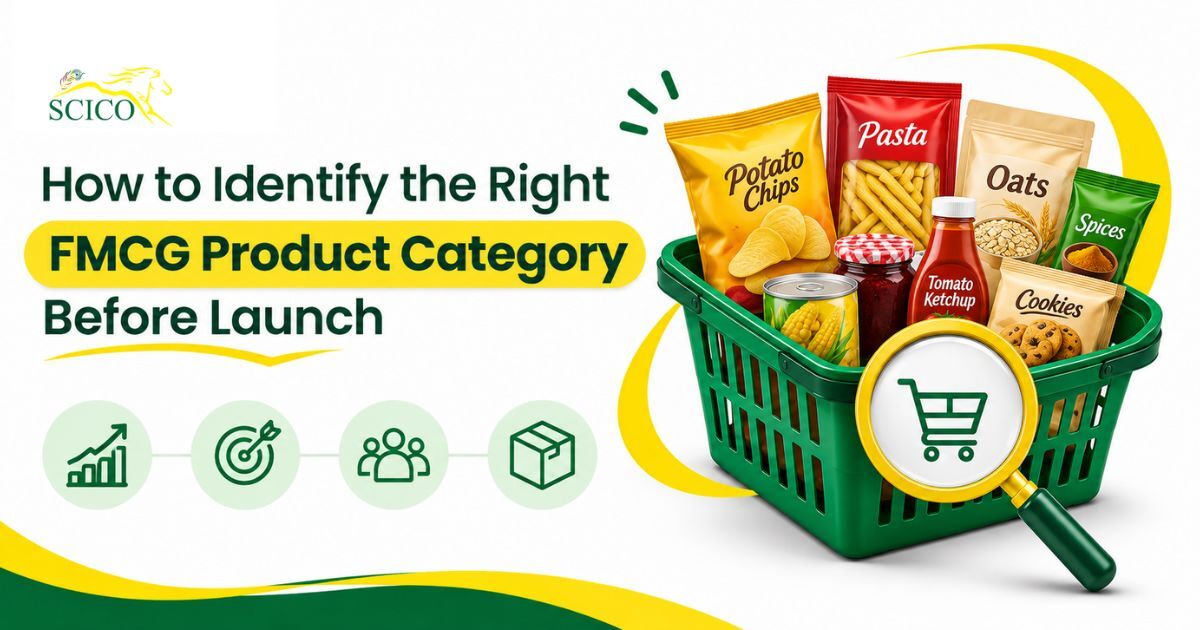
Most FMCG launches don’t fail because the product is bad. They fail because the brand picked a shelf nobody was looking at, or one already packed with big names. Your category shapes pricing, packaging, distribution and margins long before the first carton ships.
Why FMCG Product Category Research Comes First
Founders often fund the recipe, packaging and label first, then go looking for buyers. FMCG product category research flips that order. You study the shelf first, then build a product that fits a gap.
Good research answers three plain questions:
- Who buys in this category, and how often?
- What do they pay, and where do they shop?
- Which brands own the shelf today, and where are they weak?
Skip this step and you end up guessing on price, pack size and channel.
How to Spot a Real FMCG Market Opportunity
A growing category is not automatically a good one. You want an FMCG market opportunity where demand is rising faster than decent supply.
Check Demand Signals
Ask retailers and distributors in your target city what customers request that they can’t stock. Walk through kirana shops and modern trade outlets, and note the gaps and the lines that sell out. The IBEF overview of the FMCG industry shows broad trends, but the best FMCG product category research pairs desk data with store visits.
Study the Competition
Count the brands on the shelf. List their prices, pack sizes and claims. If three national players dominate with heavy schemes, a new brand will struggle. If the shelf holds only a few weak regional options, you may be looking at a genuine product category opportunity.
Key Factors in FMCG Category Selection
Score each shortlisted category against a few hard filters. Sound FMCG category selection tests whether the numbers work.
Margins and Pricing Room
Work out your landed cost, then add distributor, retailer and scheme margins. If the final shelf price sits above what shoppers will pay, drop that category. Proper pricing and margin planning now saves a painful relaunch later.
Distribution Fit
Some categories sell through general trade. Others need chilled storage or modern trade listings. Smart FMCG category selection matches the product to a channel you can actually reach, and to the kind of distributor network you can realistically build.
Regulatory Needs
Food and beverage products must follow FSSAI rules. Products without a set standard, such as many functional foods, need product approval before licensing. Check this early.
Repeat Purchase Potential
FMCG runs on repeat orders. A product people buy once a year won’t keep distributors interested. A strong FMCG market opportunity always comes with a natural buying cycle.
Test Your Product Category Opportunity Before Scaling
Even after thorough FMCG product category research, run a small pilot in one city or one channel. Track how fast stock moves, what retailers say and whether shoppers come back. A pilot shows if your product category opportunity holds up in real stores and not just on a spreadsheet.
Adjust pack size, price or messaging, then back a wider new product launch.
Conclusion
Your category decides how hard every later step will be. Careful FMCG product category research, honest scoring on margins and distribution, and a small pilot give you a far better shot at a launch that lasts. Spotting the right FMCG market opportunity early also makes distributor talks easier. If you’d like help mapping the market before you commit, SCICO(Sharp Consulting and Implementing Company) works with FMCG founders from early research through to market entry and sales. Get in touch to talk through your shortlist.
FAQs
1. What is FMCG product category research?
It is the process of studying a category before you launch in it. You look at who buys, how often, at what price and which brands lead. FMCG product category research helps you build a product that fills a real gap.
2. How long should category research take before a launch?
For most new brands, a few weeks of desk work and store visits is enough to build a shortlist. A pilot adds a couple of months. Rushing this stage often leads to pricing or distribution mistakes that cost more later.
3. Can a small brand compete in a crowded FMCG category?
Yes, if it has a clear angle. A regional flavour, a better pack size or a sharper price point can win shelf space. Look for an FMCG market opportunity where the big brands are serving shoppers poorly or ignoring them.
4. Which sales channel should I test first?
Start where your target shoppers already buy. Everyday staples usually do well in general trade and kirana stores. Premium or niche products often work better in modern trade or online first, where shoppers actively hunt for new options.
5. Do I need FSSAI approval for every new food product?
Not always. Products that fall under an existing FSSAI standard only need the right licence. New or non-standard foods, including many functional and nutraceutical products, need product approval first. Confirm with your licensing authority before you finalise the category.
Leave a comment