
Getting your product listed in a supermarket chain feels like the finish line. Then the first quarterly review arrives. The buyer wants to know why your sell-through is trailing a private label that launched six weeks after you did.
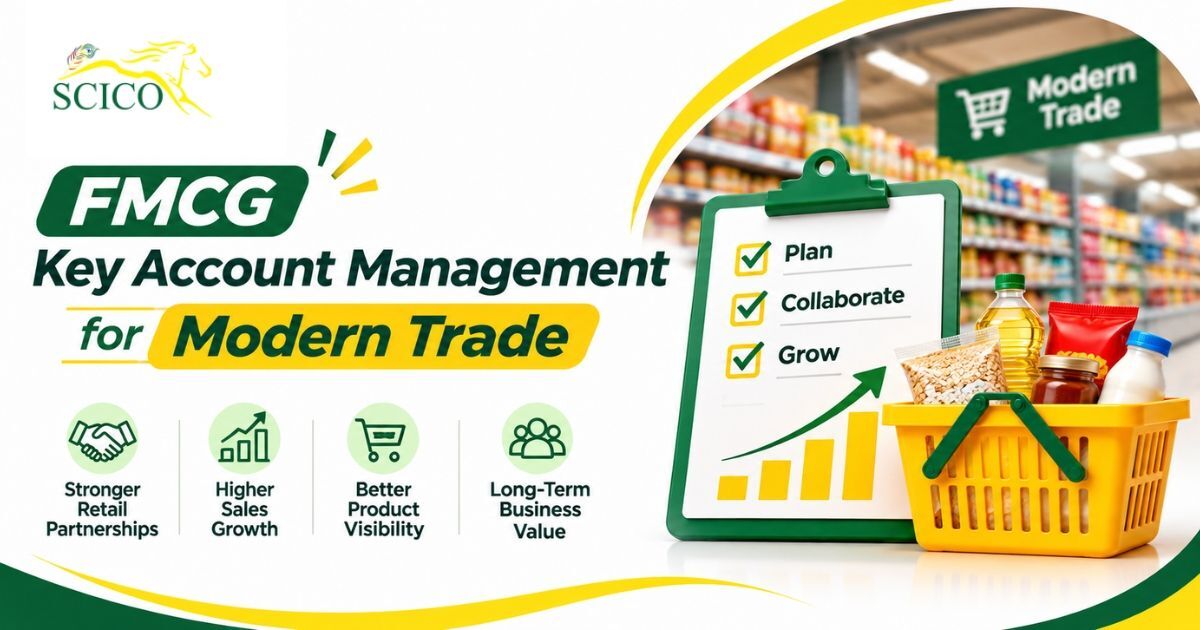
That gap between a listing and lasting growth is where FMCG key account management earns its place. It means treating each large retail customer as a business partner with its own targets, data and pressures, rather than another order book.
Why Modern Trade Buyers Play a Different Game
A distributor in general trade cares about margin and credit terms. A category buyer at a hypermarket chain thinks about the whole aisle. Your brand is one line in a category they’re judged on, so every conversation should start with growing their category.
And that aisle is crowded. NielsenIQ data reported by IANS shows that shelves in Indian modern trade now hold more than 78,000 items, while premium-plus products drive almost 40% of FMCG sales in the channel. With that much choice, a slow-moving SKU doesn’t get a second chance. It gets replaced.
This is why modern trade key accounts need dedicated ownership. Someone has to know each chain’s store count, promotion calendar, payment cycle and buying team by name. When that knowledge sits with one person, problems surface early instead of at the review table.
What Good FMCG Key Account Management Looks Like in Practice
Start by sorting your accounts, because a sound key account strategy never treats every chain the same. A national chain with hundreds of stores and a regional grocer with a dozen outlets need different terms, promotions and attention.
Plan the Year With the Buyer
A joint business plan sets shared volume targets, promotional slots, festive windows and launch dates. Once both sides sign off, negotiation turns into collaboration.
Walk In Knowing the Numbers
Study sell-out data, stock-outs and planogram compliance before every meeting. Arriving with a fix for an underperforming SKU builds more trust than any discount.
Back the Plan in Store
A plan agreed at head office means little if the shelf is empty on Saturday evening. Merchandisers and in-store activation close that gap.
The Discount Trap That Drains Retail Margins
Many brands assume a deeper trade discount will buy growth. It seldom does. The buyer banks the margin, sales lift for a fortnight, and the next negotiation starts from a lower base.
What protects FMCG retail accounts is tighter control of the details that drain profit quietly: unchecked deductions, unresolved claims, damaged returns and listing fees that never paid for themselves. Fix those, and the account earns more without a bigger discount.
From First Listing to Lasting Partnership
Sharp Consulting and Implementing Company (SCICO) works with FMCG brands from start-ups to established companies. Its FMCG sales consulting covers key account planning, joint business planning and negotiation, alongside trade marketing and in-store activation. The emphasis is on implementation rather than advice that sits in a slide deck. Founded by Vijay Sokhi in 2017, SCICO focuses on helping brands launch and grow in offline retail.
Your Next Buyer Meeting Starts Now
Modern trade rewards brands that arrive prepared. Sort your accounts, plan with each buyer, watch the shelf and guard your margins. That is what strong FMCG key account management delivers: steady growth with retailers who want you on their shelves.
If your chain listings aren’t turning into repeat orders, talk to SCICO about an account plan built for modern trade.
FAQs
1. What is FMCG key account management?
It is the practice of managing large retail customers, such as supermarket and hypermarket chains, as long-term partners. FMCG key account management covers joint planning, promotions, shelf performance, negotiations and payment terms, so the brand and the retailer grow together.
2. How are modern trade key accounts different from general trade?
General trade runs through distributors and small independent stores. Modern trade key accounts are organised chains with central buying teams, planograms and data-led reviews. They expect category growth, promotional support and reliable supply, not just attractive margins and discounts.
3. What should a key account strategy include?
A useful plan covers account segmentation, a joint business plan with each buyer, a promotional calendar, sell-out tracking and clear ownership of every chain. It should also set firm rules for deductions, claims and returns to protect profitability over time.
4. Why do products get delisted from modern trade chains?
Shelf space is limited and new products arrive constantly, so buyers replace SKUs that don’t sell through fast enough. Poor stock availability, weak in-store execution and missed promotional commitments also put a listing at risk, even for well-known brands.
5. How can SCICO help brands with retail chains?
SCICO supports FMCG brands with key account planning, joint business planning, negotiation and in-store activation. The team works on implementation, helping brands turn new listings into steady repeat orders and stronger, longer relationships with modern trade buyers.
Leave a comment