
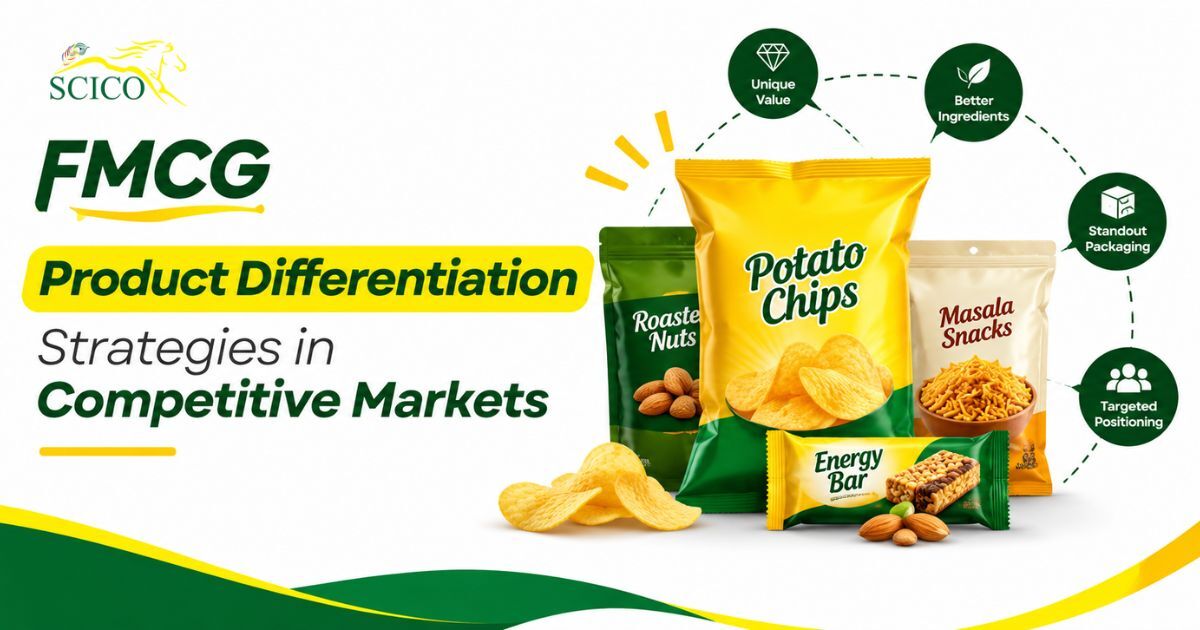
Walk down any kirana aisle and count the chip brands. Now count the ones you could tell apart with your eyes closed. That gap is the whole problem. FMCG product differentiation is the work of giving shoppers a clear reason to pick your pack over the one beside it. In categories where products look and taste alike, that reason rarely comes from the recipe alone.
This guide from SCICO (Sharp Consulting and Implementing Company) explains where real differences come from and how growing brands can build them without a giant budget.
Why “Better Quality” Doesn’t Sell Itself
Most founders believe a superior product will win on merit. On a shelf, it won’t. Shoppers decide in seconds, and nobody can taste quality through a sealed pack. Effective FMCG product differentiation starts with something the buyer can see, feel or understand at a glance.
Skipping this step has a cost. McKinsey’s analysis of home and hygiene categories found that private brands gained the most momentum in commoditised categories with little innovation or differentiation, such as tissue and paper towels. When nothing separates one brand from another, price becomes the only deciding factor.
Four Levers of FMCG Product Differentiation That Actually Work
You don’t need a breakthrough formula to stand apart. Winning brands get a handful of practical decisions right.
Sharp FMCG Product Positioning
Positioning decides who the product is for and why it matters to them. A tea bag brand aimed at busy office workers should talk about speed and a consistent cup, not heritage estates. Good FMCG product positioning narrows the audience on purpose. A product meant for everyone stands out to no one.
Packaging That Does the Selling
Your pack is the only salesperson present at the moment of purchase. Colour, shape, size and one clear benefit line all count. A resealable pouch for fruit puree solves a real kitchen problem and gives the shopper a reason to switch.
Pricing Built Around Value
Price tells buyers what to expect. Pitch too low and they assume a compromise. Go too high without a visible reason, and they walk away. A well-planned pricing and margin strategy keeps distributors and retailers motivated while the shelf price still feels fair.
Distribution Where Rivals Are Missing
Being available where competitors aren’t is a difference in itself. A brand with strong presence in tier-two and tier-three towns wins customers simply by being there.
Product Differentiation Examples From Indian Shelves
A few well-known product differentiation examples show how this plays out. Paper Boat built its identity around traditional Indian drinks such as aam panna and jaljeera, sold in distinctive pouches. ITC’s Bingo! Mad Angles stood apart in a crowded snacks aisle through its triangular shape. Neither brand leaned on claims of better ingredients. Each gave shoppers one clear, memorable difference.
From a Single Edge to a Lasting Lead
Any single difference can be copied within months. A rival can match your pouch, flavour or price. What’s hard to copy is the combination. Stack a clear position, recognisable packaging, sensible pricing and reliable distribution, and you build an FMCG competitive advantage that competitors can’t replicate in one move.
Ready to Give Shoppers a Reason to Choose You?
FMCG product differentiation isn’t a one-off branding exercise. It’s a chain of decisions running from product development to the last retail shelf. SCICO works with food and beverage brands on these decisions and stays involved through on-ground implementation. Planning a launch or relaunch? Speak to our new product launch experts to find where your brand can stand apart.
Frequently Asked Questions
- What is FMCG product differentiation?
FMCG product differentiation is the process of making a fast-moving consumer product clearly different from its competitors. The difference can come from positioning, packaging, pricing, format or distribution, provided shoppers notice it quickly and value it.
- How is FMCG product positioning different from differentiation?
Think of positioning as the promise: who the product serves and why they’d care. Differentiation is the proof behind it. Without a sharp FMCG product positioning, even good features end up feeling random to the buyer, and they get ignored.
- Can small FMCG brands compete with large companies?
They can. A small team doesn’t wait weeks for sign-offs, so it can trial a new pack or flavour quickly. Pick one difference that matters, get stocked well in a few regions, and big names notice too late.
- What are some good product differentiation examples in FMCG?
ITC gave Bingo! Mad Angles a triangle shape, and people remembered it. Paper Boat put aam panna and jaljeera into distinctive pouches. Both are useful product differentiation examples because the difference was obvious before anyone tasted anything.
- How does SCICO help FMCG brands stand out?
SCICO works on the parts that decide whether a product sells: go-to-market planning, pricing, packaging, branding and sales strategy. And the team doesn’t stop at advice. It stays on the ground until the difference shows up on shelves.
Leave a comment