
Most FMCG brands don’t lose sales because the product is weak. They lose them because the product isn’t on the shelf when the shopper walks in. A salesperson skipped the outlet. The distributor ran out of stock. Or the route was so long that the last ten shops never got a visit.
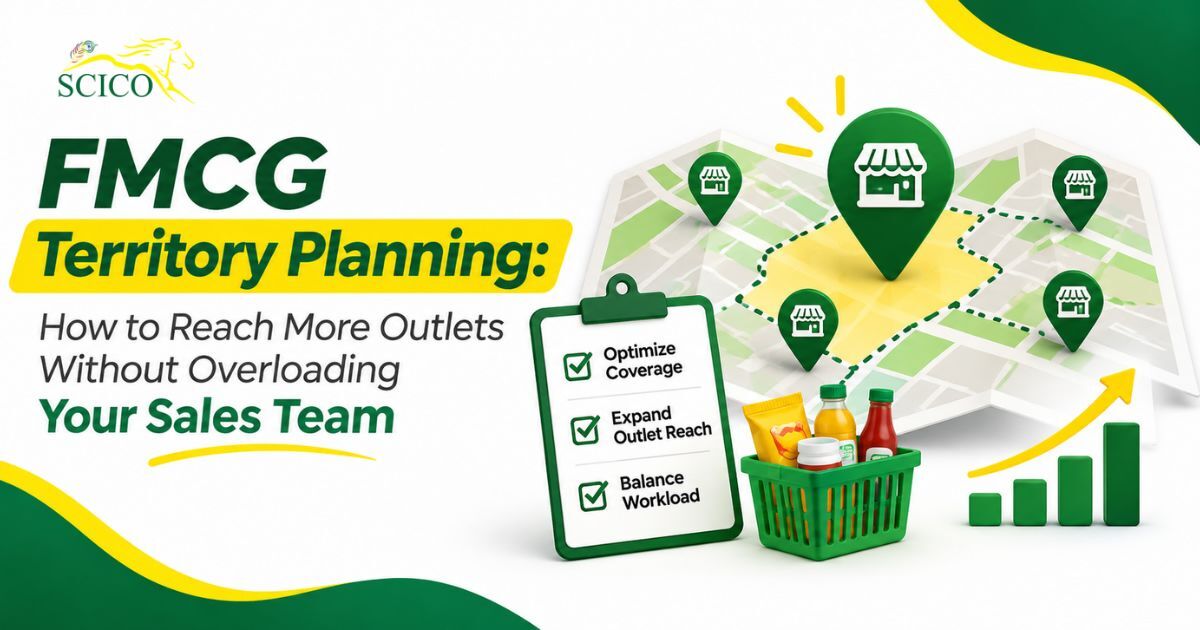
FMCG territory planning fixes this at the root. It decides who sells where, how often each outlet is visited, and which areas deserve more attention than they get today. Here’s how to approach it, drawing on how Sharp Consulting and Implementing Company (SCICO) helps FMCG brands launch and restructure.
Why Good Products Still Go Missing From Shelves
Ask a sales head about coverage and you’ll usually hear one number: total outlets billed. That figure hides a lot. Two reps can each bill 400 outlets and deliver very different results if one spends half the day travelling between scattered villages.
Weak FMCG territory planning shows up in familiar ways. Some areas get three visits a week while others wait a month. High-value outlets receive the same attention as small kiosks. New pin codes stay untouched because nobody owns them.
The map itself is also shifting. NielsenIQ reported that rural FMCG volumes grew 7.7% in Q3 2025, ahead of urban markets for the seventh quarter in a row. Territories drawn mainly around cities now miss a real share of that demand.
Start With Outlet Data, Not Old Habits
Good sales territory planning begins with a simple question: where are your buyers, and what is each one worth? Build an outlet universe for every area. List each kirana, chemist, paan shop and modern trade store, then rank them by sales potential rather than by how easy they are to reach.
Next, group outlets into beats a rep can finish in one day. A beat of 35 outlets spread across 40 kilometres is very different from 35 outlets in two busy markets. Travel time matters as much as outlet count.
Matching FMCG Territory Planning to Distributor Reach
Your distributor sets the outer limit of any territory plan. If the delivery vans don’t reach a town, adding a salesperson there achieves little.
That makes FMCG market coverage a joint decision with your channel partners. Map each distributor’s delivery radius against your outlet universe. The gaps tell you where to appoint a sub-stockist, where a wholesaler-led model makes more sense, and where to wait until demand justifies the cost.
Visit Frequency Decides Whether the Plan Works
Not every outlet needs a weekly call. A busy supermarket might need two visits a week, while a village shop selling small packs can run on a fortnightly cycle. Matching visit frequency to outlet value is the heart of a sound sales coverage strategy.
Review it every quarter. Demand changes with the seasons, new outlets open and rep performance varies by area. A plan that never changes slowly drifts away from the market it was built for.
Turning a Territory Map Into Real Growth
FMCG territory planning isn’t a one-time spreadsheet exercise. It’s a working system linking outlet data, distributor reach and rep effort.
Keeping it current is the gap SCICO was set up to close. Rather than handing over a strategy deck and leaving, the team works alongside your sales staff to build territories, test them on the ground and adjust until the numbers move.
Planning a launch or dealing with patchy coverage? Talk to SCICO about a territory plan built around how your market actually buys.
FAQs
- What is FMCG territory planning?
It’s about who covers which streets. You split the market into areas, give each rep a fixed set of outlets and decide how often they call. Done well, FMCG territory planning stops big outlets being ignored and small pockets going unserved.
- How often should sales territories be reviewed?
Every three months suits most FMCG brands. That’s often enough to catch seasonal swings, new shops opening and a distributor dropping a route. Launching a product or moving into a new region? Don’t wait for the quarter. Review straight away.
- What data do I need to start sales territory planning?
Start with your outlet list: where each shop is, what type it is and what it has bought before. Add your distributors’ delivery routes and how many calls each rep can make. Your sales territory planning then rests on facts, not old habits.
- How does FMCG market coverage differ between urban and rural areas?
In a city, shops are packed close, so one rep can get through a lot of them in a day. Villages are different. Outlets sit far apart and orders are small, so rural FMCG market coverage leans on sub-stockists and wholesalers.
- Can a consultant help improve our sales coverage strategy?
Yes. An outside team can audit your beats, outlet data and distributor network without internal bias. SCICO goes a step further by staying on to implement the new sales coverage strategy with your team until results show on the ground.
Leave a comment