
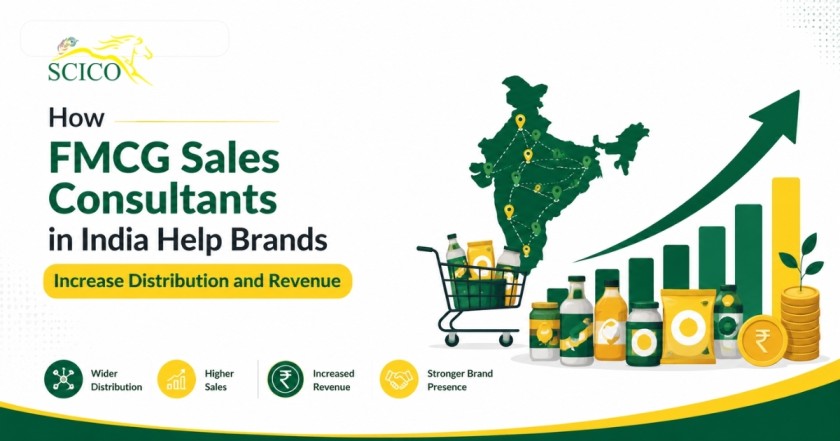
India’s FMCG market is no longer driven by one route to market. Traditional retailers remain important, while modern trade, e-commerce and quick commerce are changing how consumers discover and replenish products. NIQ’s 2026 reporting shows that channel performance is becoming more selective, making distribution decisions as important as product and promotion decisions.
For growing brands, FMCG sales Consultants in India can add practical value by assessing where a product should sell, how distributors should be managed, which territories deserve investment and how sales teams can improve execution.
Build Wider Market Reach with an FMCG Distribution Strategy in India
A strong FMCG Distribution Strategy in India helps brands improve market reach by identifying priority markets, selecting suitable channels, strengthening distributor networks, expanding outlet coverage, and monitoring execution. This approach can reduce distribution gaps, improve product availability, and create a clearer path from stronger market presence to sustainable revenue growth.
1. Prioritise the Right Markets and Territories
Consultants assess category demand, consumer profiles, competition, outlet density, logistics and performance to prioritise territories. The focus may be selected cities, tier-2 and tier-3 markets or rural clusters, prioritising productive coverage.
2. Strengthen Distributor and Retailer Networks
Consultants can review territory allocation, margins, stock movement, order frequency, credit practices and service levels. They can identify overstretched distributors or territories requiring partners.
Better beat planning, outlet segmentation and sales-force productivity can improve availability and reduce missed sales caused by stock-outs or inconsistent visits.
3. Balance Traditional and Emerging Channels
India’s FMCG landscape is increasingly omnichannel. Traditional trade remains important, while modern trade and e-commerce continue to gain ground. NIQ reported that e-commerce accounted for 18% of FMCG sales in the top eight metros in Q4 2025, with quick commerce contributing more than three-quarters of e-commerce FMCG sales.
Not every brand should enter every digital channel. FMCG sales Consultants in India can assess channel fit, assortment, pricing, promotional requirements and fulfilment economics before recommending investment.
4. Turn Sales Data into Action
Distribution should not be measured only by distributor count. Brands need visibility into outlet productivity, distribution, secondary sales, stock availability, sales per outlet and territory performance.
FMCG sales Consultants in India can establish dashboards and review routines so managers spot weak territories, slow-moving stock and declining outlet productivity earlier.
5. Build Growth Strategies Around Profitability
Revenue growth is more valuable when margins remain healthy. The best FMCG consultant in India will look beyond headline sales and examine the economics behind growth.
This may involve pack-price architecture, promotions, distributor incentives, product mix and targets. Affordability and pack sizes also deserve attention as consumers become more selective.
6. Improve Sales-Team Execution
A strong strategy can fail when field execution is inconsistent. Consultants may help define territories, classify outlets, improve beat plans, set targets and establish review mechanisms.
Training can cover order conversion, merchandising, retailer communication, product placement and follow-up, making sales activity more consistent.
7. Adapt to Channel-Led FMCG Growth
NIQ’s Q1 2026 snapshot describes India’s FMCG market as moving towards more selective, channel-led growth, highlighting the need to reassess demand drivers, channel priorities and pricing or pack architecture.
This makes a flexible distribution model essential. FMCG sales Consultants in India can help management test expansion plans, measure results and refine the route to market.
Key Takeaways
Distribution means placing the right product in the right market through the right channels at sustainable costs. As India’s FMCG landscape grows more competitive, brands need practical FMCG sales growth strategies to strengthen market presence, improve channel performance, and achieve consistent, measurable revenue growth.
SCICO (Sharp Consulting and Implementing Company) helps businesses improve distribution, sales execution, and commercial performance through practical consulting and implementation support. Its expertise enables brands to identify market opportunities, strengthen sales processes, optimise distribution networks, and build sustainable growth plans aligned with their specific business objectives and market requirements.
Frequently Asked Questions
1. How can FMCG sales consultants help increase revenue?
FMCG sales consultants help brands assess markets, strengthen distributor and retailer networks, improve outlet coverage, optimise sales territories and monitor execution. They can also review pricing, promotions, product mix and channel performance, helping management identify practical opportunities for profitable growth rather than pursuing distribution expansion without clear commercial returns.
2. When should an FMCG brand hire a sales consultant?
Brands should consider an FMCG consultant when sales growth is uneven, distribution is weak, expansion plans are unclear, distributors underperform, or internal teams lack specialised route-to-market expertise. Consultants can provide an independent assessment and help convert market data into territory, channel and execution decisions for sustainable growth.
3. What should an FMCG distribution strategy in India include?
An FMCG distribution strategy in India should consider target consumers, category demand, geography, distributor capability, retailer coverage, logistics, pricing, margins and channel economics. It should also account for traditional trade, modern trade, e-commerce and quick commerce where relevant, rather than applying one distribution model to every market.
4. Can an FMCG consultant help a new brand?
Yes. A best FMCG consultant in India can support both established and emerging brands, although the scope may differ. Established companies may need distribution optimisation or productivity improvements, while newer brands may need territory prioritisation, distributor appointments, channel selection and a practical route-to-market plan from the outset.
5. How should FMCG sales growth strategies be measured?
FMCG sales growth strategies should be measured through revenue and volume alongside distribution, outlet productivity, availability, repeat orders, channel margins, promotional effectiveness and customer acquisition or retention. Reviewing these indicators together helps a brand understand whether sales are growing because of stronger demand, better distribution or temporary promotional activity.
Leave a comment